
Beyond the Clinical Gaze – A Psychology Student’s Journey in Palliative Care
– Ms Shreya Krishnan, Visakhapatnam
As a psychology student, my clinical experience has primarily been rooted in psychiatric wards, where I conducted assessments and supported families through the complexities of severe mental disorders. I walked into the Department of Palliative Medicine at Homi Bhabha Cancer Hospital, Visakhapatnam, not knowing what to expect, as the two fields seemed very different in my mind. Little did I know that I was in for a surprise—for within the four walls of this hospital, I encountered a completely different side of medicine, psychology, and, most importantly, life and humanity.
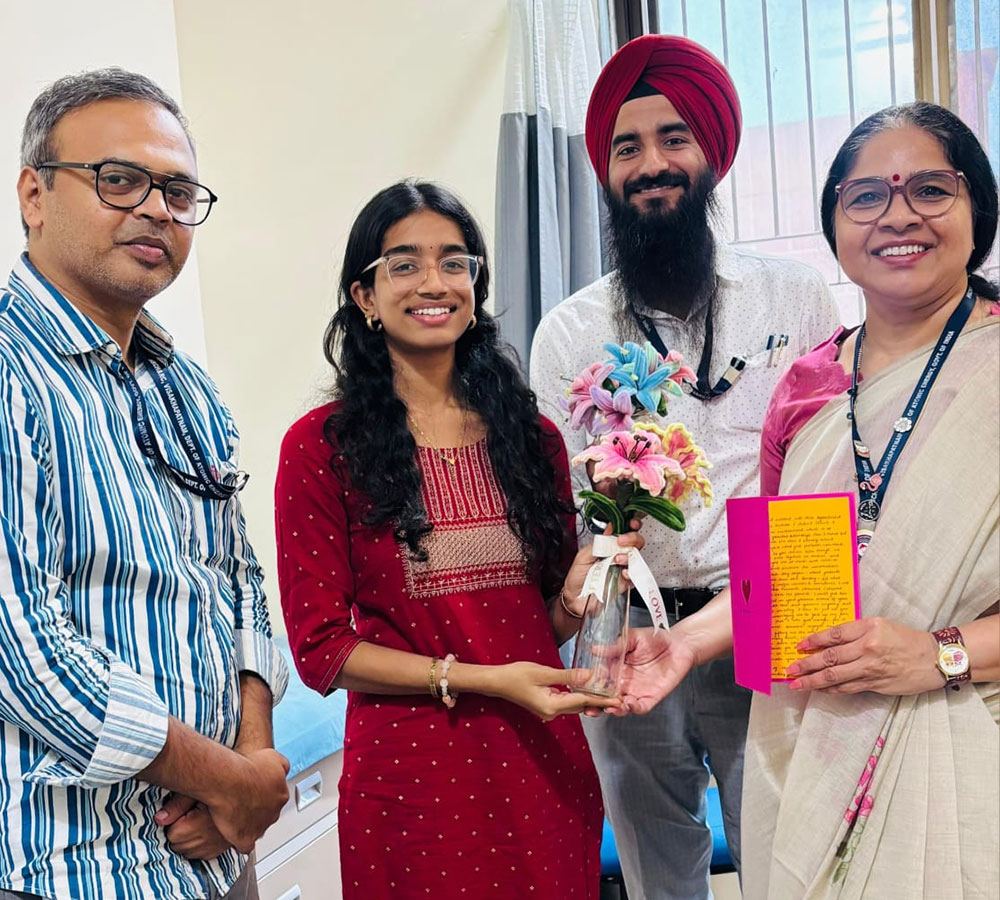
I had the good fortune of being mentored by Dr. Vidya Viswanath, who, in addition to being a highly experienced physician, is one of the kindest and most gentle individuals one could ever meet. I thought I would never fit into the environment of this hospital—feeling lost while listening to complex medical jargon about tumors and medications, seeing patients with painful illnesses, and having no idea how to help them as a non-medical student. However, Dr. Viswanath encouraged me to apply what I was familiar with: to see the patient beyond their illness, and to try to understand who they are as a person, what their lives are like, and more. Each day, I wrote about my time at the OPD—everything I saw, heard, and felt while listening to the patients’ stories. This opened my eyes to the emotional pain and suffering of both patients and their caregivers, transforming my perspective completely—from clinical observation to genuine empathy.
The first day was spent acquainting myself with the new surroundings. Everything was new to me! It was truly a transformative experience. Seeing how palliative care empowers patients and caregivers, beyond just controlling and monitoring physical pain, made me realise how different this can look for each patient. Some patients and their families need reassurance – that acquiring the disease was not their fault and that they are still capable of living a good life. Others are worried about what will happen to their sons, daughters, and other loved ones when the time comes.
One instance of this stayed with me long after I left the OPD. A woman was wheeled into the consultation room by her mother, her eyes scanning her surroundings, whose walls were flooded by the sterile white light. They revealed that the last time she came for a check-up was in November 2025. When we asked her why she hadn’t come for so many months, she told us that she was afraid to start treatment. She tearfully revealed that she is paralyzed by fear, not just of the cancer, but of leaving behind the daughter she spent ten years trying to conceive. I realised that the diagnosis was not a threat to her life alone, but also to that of her daughter, who may grow up without a mother who loves her so much. Oftentimes, when patients do not comply with treatment protocol or miss regular check-ups, there is a deeper, more emotionally painful reason for this, like what we saw today. In such times, there is a shift in our focus from blame, ‘why didn’t she come in?’ to empathy, ‘how can we help her carry this weight?’
In the palliative care department, one may also have patients who simply refuse to come to the hospital. In such situations we have to rely solely on caregiver accounts to know how the patient is doing.
To me, their absence speaks volumes about their emotional state. Are they afraid of hearing that their prognosis is getting worse, or angry that, despite everything, they don’t seem to get better? Disease strips a person of autonomy. Choosing not to enter the clinic is one of the few remaining choices they have. It is a silent way to reclaim a life that feels increasingly filled with schedules, medications, prescriptions, and the fear of death. When a patient cannot bring themselves to walk through our doors, we must take a moment to realise that healing is not always about a cure. Sometimes, it is acknowledging that the emotional toll of the journey has become too heavy to carry. It is so important to treat the “empty chair” with as much grace and empathy as we do the patient themselves. By honouring this, we honour the truth of their experience: that they are more than a diagnosis, and their fear is as worthy of our care as the physical pain, which is a core idea of palliative medicine.
One of the patients encounters I hold very dearly was with a girl no older than ten years. She gifted the staff and me some earrings and nail polish—a gesture that deeply touched my heart. Her dimpled smile could light up anyone’s day. She asked me to play a bunch of games with her, from rock-paper-scissors to snakes and ladders and more. When I went for lunch, I saw her running around the hospital, waving at everyone, and greeting them with a cheerful smile. I do not know what her diagnosis is, and I don’t think knowing it would make any difference, just like it doesn’t to her. Her illness, her frequent visits to the hospital, and the potentially life-threatening nature of the disease have not crushed her playful spirit. It’s so admirable to see her not lose her childhood sense of play, her kind spirit, and her efforts to make everyone around her feel loved as well. Not everyone would have this kind of resilience when faced with a disease like cancer, which can potentially put a full stop to one’s life, least of all a child. It always breaks my heart to see a child with cancer, but we often forget that their life is so much more than just that. Even if it is a life cut short, it is a life nonetheless, that’s meant to be lived full of love, laughter, and joy, and this little girl was the perfect example of what we try to do in palliative care – to maintain a good life, even when it’s slowly being eaten away by cancer.
Integrated Hospital-Based Continuity of Care is a system where a medical team regularly visits the homes of patients who no longer receive disease-directed treatment and receive best supportive care, which I had the opportunity to join. To see them in their own homes, not as just patients, but as people surrounded by their family, their context, and their lives, was one of the most humbling experiences I’ve had. The walls and rooms echo memories of life before the disease consumed them, as well as the hope of patients and families that they are in good hands—hands that have travelled miles to meet and treat them where they are.
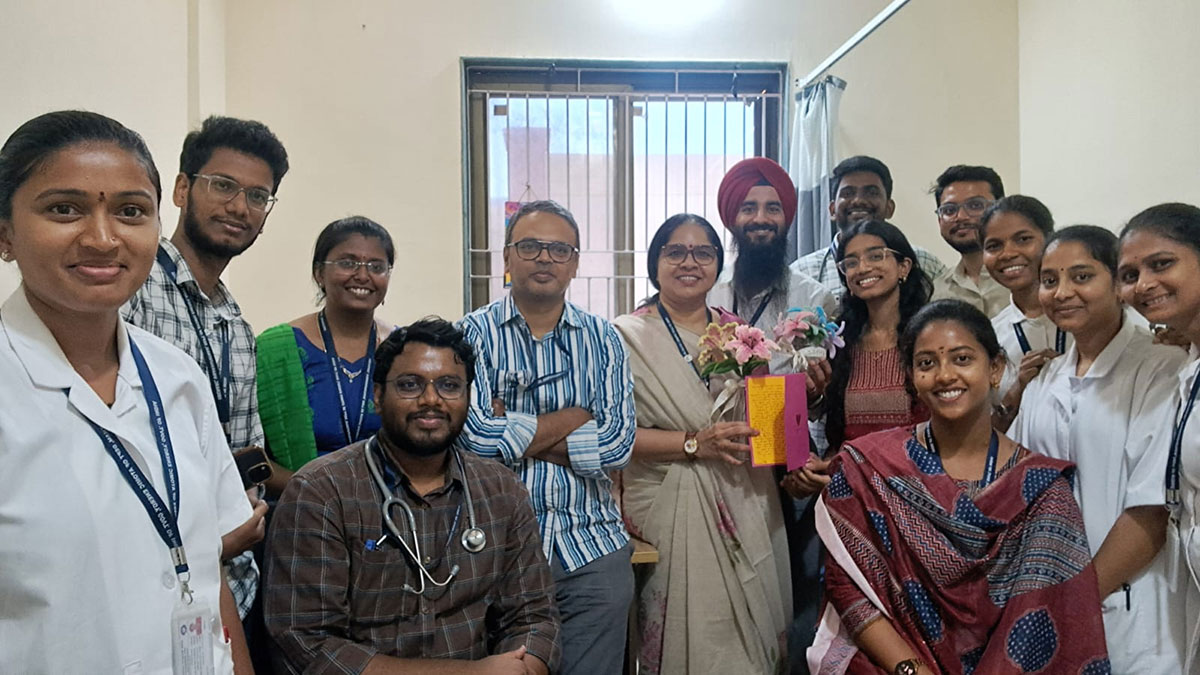
I would not be doing justice to my discussion on the field of palliative care without mentioning the doctors, nurses, social workers, counsellors, and technical and non-technical staff who work day in and day out to ensure that their patients are able to live as comfortably as possible. Each day, one encounters different kinds of patients like I mentioned earlier, with different ailments and expectations. But one thing that is always common, from my observation, is the resilience of these doctors, nurses and others. And I imagine it to be a very emotionally exhausting job, having to tell a patient that they haven’t got much longer to live. Despite the sentence breaking your own heart, listening to a patient’s caregiver lament about their fate and ask “Why did this happen to us”, and not knowing what to tell them. I think of a child fighting a losing battle with a tumor that showed up unexpectedly, or an old man on his deathbed cursing God for punishing him with this excruciating pain, when he did not touch a cigarette or a drink even a day in his life. I remember Dr Viswanath saying that there is no point in life at which cancer is easier or more favorable for a patient to have. But as doctors in this field, they deal with this pain every day of their lives, and is forced to face the reminder of the mortality of their own existence as well.
Existential philosophy talks about death anxiety and how humans innately view death as an extreme source of distress and the ultimate boundary. But by our own nature, we use it to give ourselves a sense of urgency and inevitably meaning to our lives. It does so by emphasizing that time is finite and choices matter. So, going by this understanding, I can only conclude that all those involved in palliative care for cancer patients wake up every single day and choose to dedicate their lives to making the lives of those who are suffering just a little better, despite their own pain and challenges. For that, I always admire and respect them.
Towards the end of the internship, I left the hospital feeling a little more whole, inspired, and grateful for the way it reshaped my perspective on the role I can play as a future psychologist or psycho-oncologist. I shall carry these many lessons with me all my life, the most important one being that, true healing lies in honoring each patient’s dignity and narrative, even when a cure is no longer possible.
About the Team:

Ms Shreya Krishnan is a third-year BSc Psychology student at Christ College, Bengaluru. She has completed a 15-day observership in the Department of Palliative Medicine at Homi Bhabha Cancer Hospital and Research Centre, Viskhapatnam. This article reflects on her experiences in the department.